The Problem — Knowledge Graphs Are a Multi-Tool Problem
You know knowledge graphs are the answer to RAG hallucinations, multi-hop reasoning, and structured AI memory. But the path from "I should build a knowledge graph" to "my knowledge graph is in production, monitored, and queryable" runs through five different toolchains, three architectural decisions you can't undo, and a visualization library that rewrites its API every quarter.
You read the GraphRAG paper. You set up Neo4j. You tried to connect it to your LLM. Then you hit the hard part: making it all work together under production load.
What This Toolkit Does For You
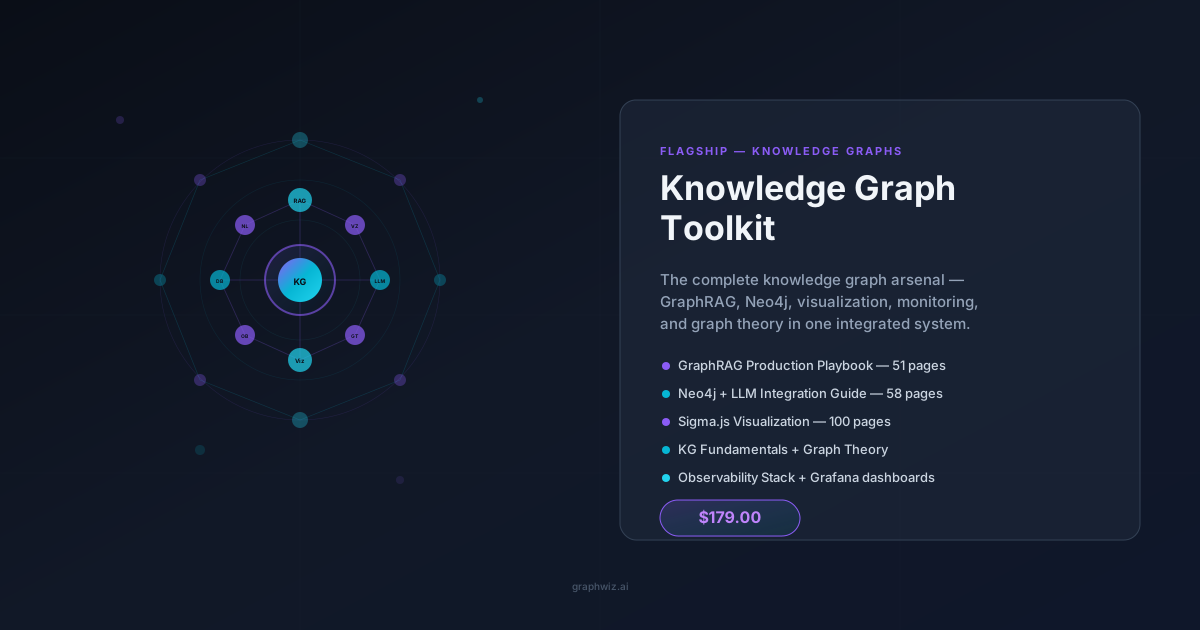
Seven integrated guides that take you from graph theory fundamentals to a fully operational knowledge graph system with monitoring, visualization, and GraphRAG — everything you need in one download.
Part 1: Foundation
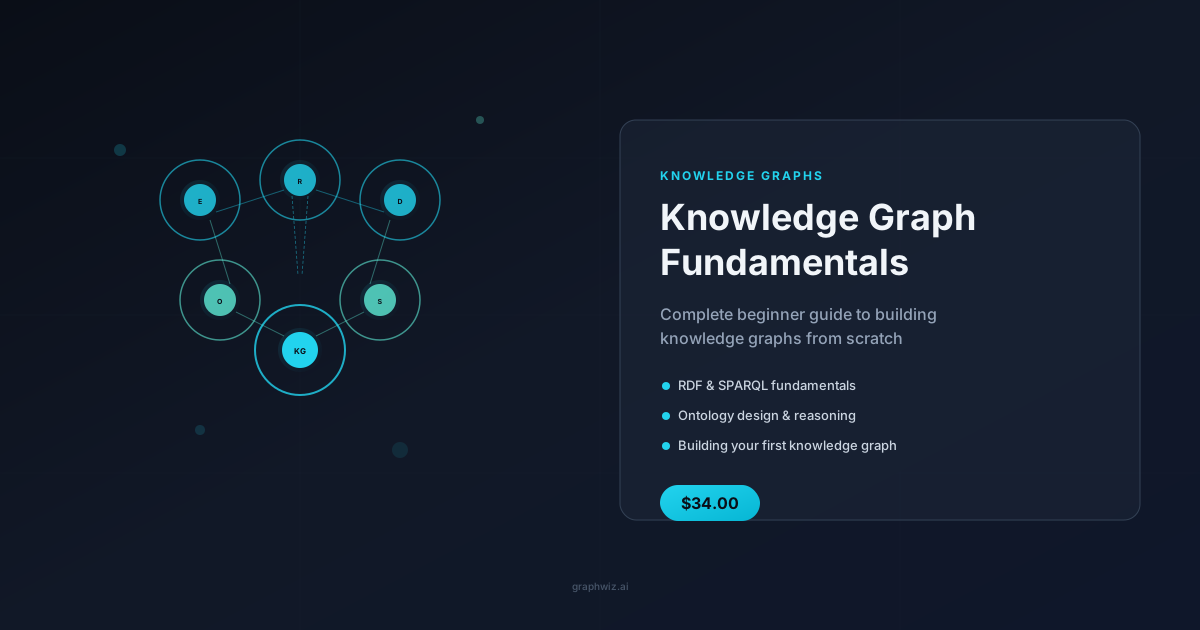
Knowledge Graph Fundamentals — Start here if you're new to KGs. RDF, SPARQL, property graphs, ontology design, and the architectural decisions that determine whether your KG succeeds or stalls at prototype stage.
Part 2: Deployment & Integration
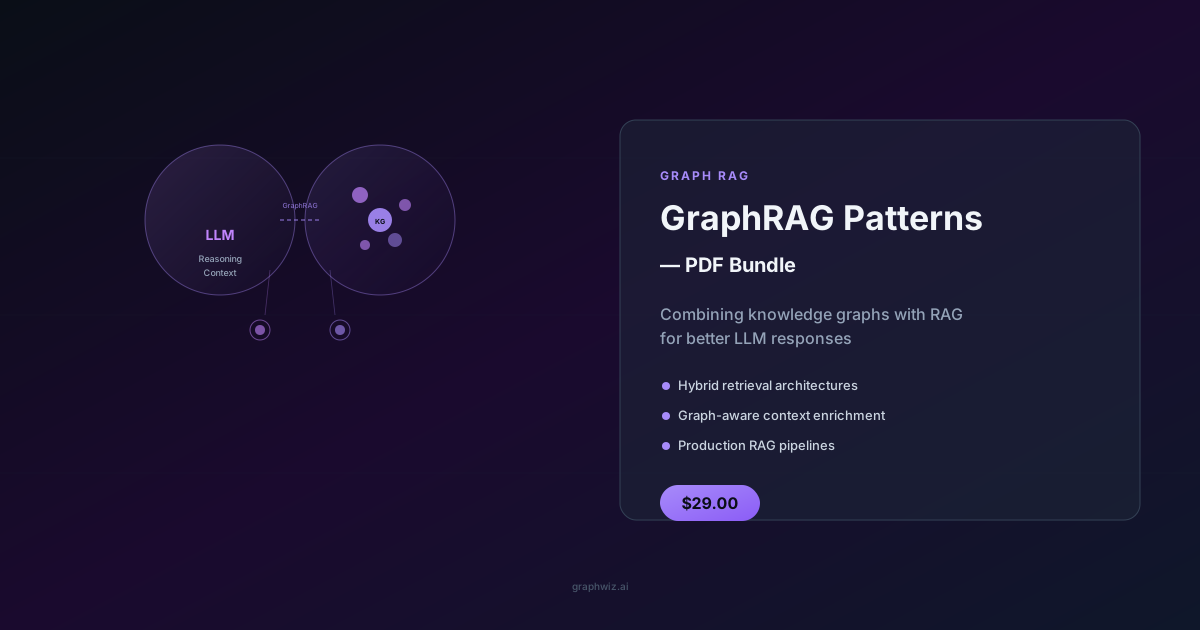
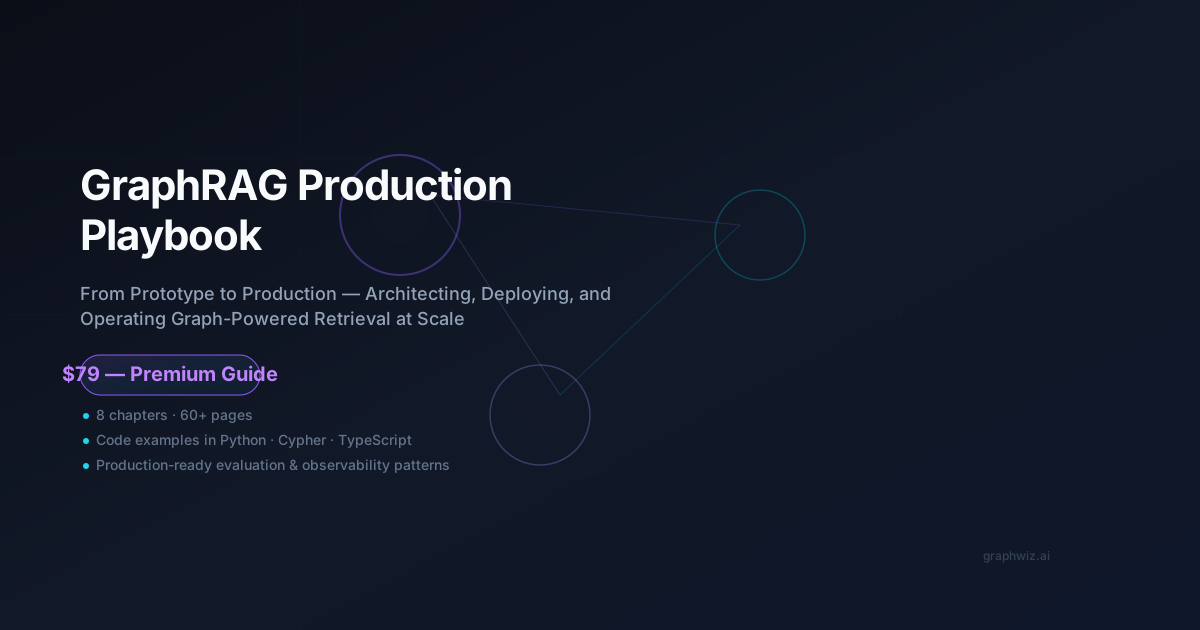
GraphRAG Production Playbook — From prototype to production. Architect, deploy, and operate graph-powered retrieval at scale. Covers hybrid vector + graph search, entity resolution, chunking strategies, and evaluation frameworks.
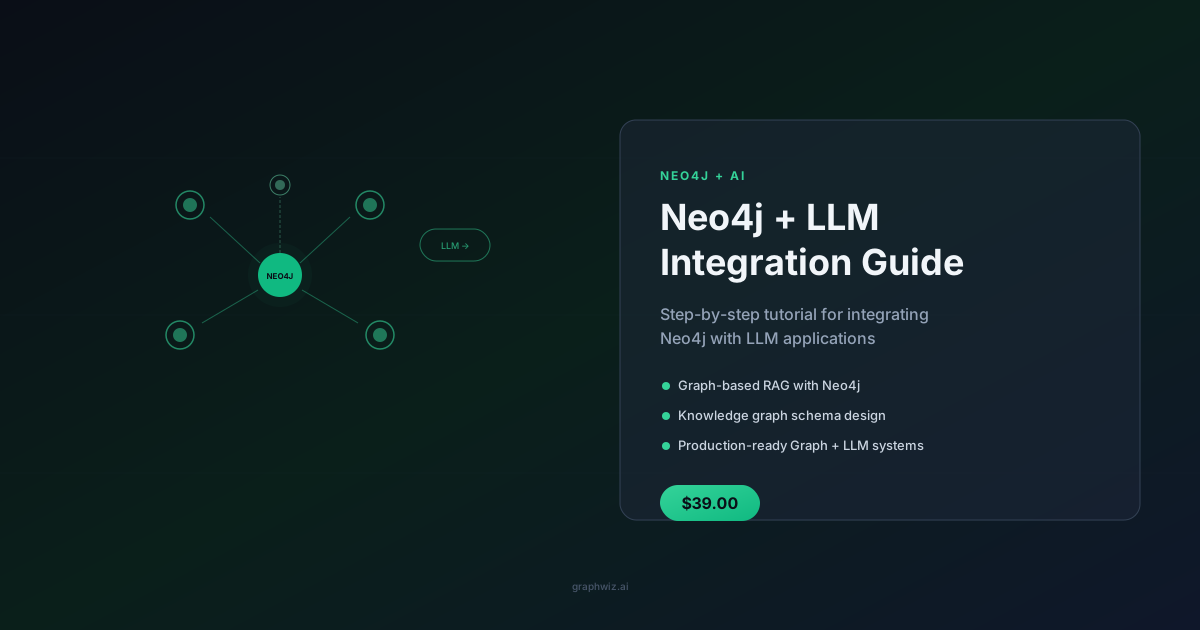
Neo4j + LLM Integration Guide — Wire Neo4j into your LLM pipeline. Cypher generation, graph traversal as retrieval, schema-aware prompting, and the pattern that makes agents actually follow the graph schema instead of hallucinating node labels.
Part 3: Graph Theory Applied
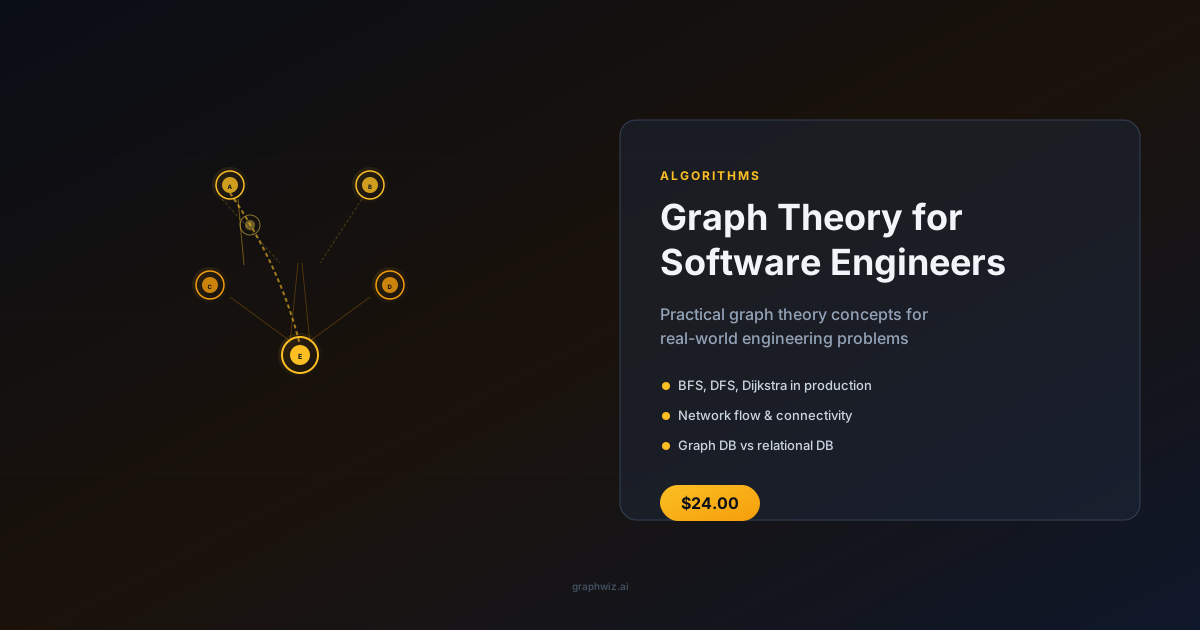
Graph Theory for Software Engineers — Not abstract math. Dijkstra, PageRank, community detection, centrality — implemented and deployed on real graph data structures. Understand why your traversal query is slow before you optimize it.
Part 4: Visualization
Graph Visualization with Sigma.js — Ship interactive graph visualizations that render 100K nodes without dropping frames. Force layouts, WebGL rendering, dynamic filtering, and the performance patterns that separate demo-quality viz from production dashboards.
Part 5: Operations
Observability for Knowledge Graph Pipelines — Prometheus metrics, Grafana dashboards, Loki log aggregation, and Alertmanager rules purpose-built for KG infrastructure. Know when your graph node count drops, query latency spikes, or Neo4j connection pools saturate.
What You'll Be Able To Do
- Design a knowledge graph schema that survives production — from ontology decisions to indexing strategy
- Deploy Neo4j with GraphRAG pipelines that answer multi-hop questions your competitors can't
- Monitor query latency, embedding freshness, and graph growth with purpose-built dashboards
- Visualize 10K+ node graphs interactively in the browser with Sigma.js
- Connect everything — LLMs, vector stores, graph databases, monitoring — into one coherent system
- Scale from prototype to production without rewriting your architecture
What You Get
| Component | Format | Pages | |-----------|--------|-------| | Knowledge Graph Fundamentals | PDF/ePub/Mobi | 50 | | GraphRAG Production Playbook | PDF/ePub/Mobi | 51 | | Neo4j + LLM Integration Guide | PDF/ePub/Mobi | 58 | | Graph Theory for Software Engineers | PDF/ePub/Mobi | 52 | | Graph Visualization with Sigma.js | PDF/ePub/Mobi | 100 | | Observability Stack — KG Edition | Docker Compose + configs | — | | Compose file for Neo4j + Prometheus + Grafana | YAML | — | | Grafana dashboard JSON (KG-specific) | JSON | — |
Pricing
$179.00 — That's seven products at less than the price of three bought individually. You get every knowledge graph resource on GraphWiz.ai in one package.
Your Outcome
Three hours from now, you'll have a deployed Neo4j instance with GraphRAG pipelines, Grafana monitoring, and an interactive Sigma.js visualization layer — all configured, documented, and ready for production data.
You'll stop reading tutorials about each piece and start building the system that ties them together.