The Problem — Your AI Stack Is a House of Cards
Setting up Dify? You can do that in 10 minutes. Installing Ollama? curl -fsSL https://ollama.com/install.sh | sh. Spinning up n8n? A three-line Docker Compose file.
Each individual tool is well-documented. The hard part — the really hard part — is making them all talk to each other in a way that doesn't collapse the first time you look away.
A production-grade homelab isn't just a bunch of containers running on the same host. It's a system where:
- Backup actually works (and you've tested the restore)
- Monitoring tells you something's wrong before your users do
- Secrets aren't hardcoded into Compose files
- Updates don't require reading three separate changelogs and hoping
- Security means TLS is automatic, not an afterthought
What This Stack Does For You
Turns a collection of individual AI tools into an integrated, production-ready platform. One docker compose up gives you backup, monitoring, secrets management, and security — all pre-wired and working together from the first deploy.
What You'll Be Able To Run After Deploying
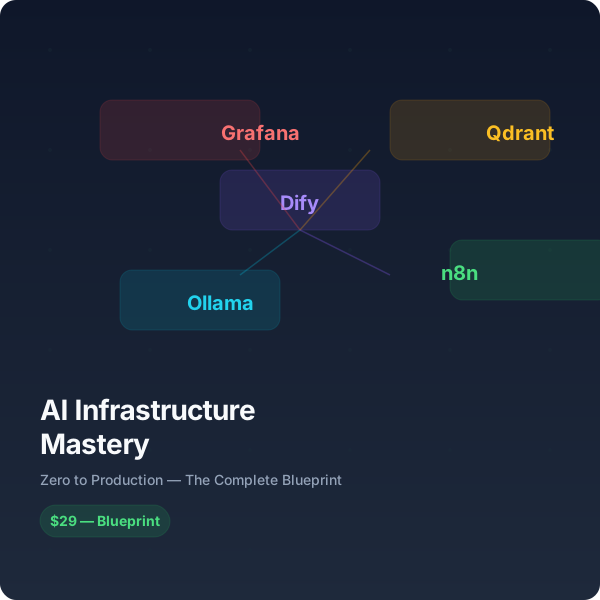
A complete 20+ service AI infrastructure platform behind a single Traefik reverse proxy with automatic SSL:
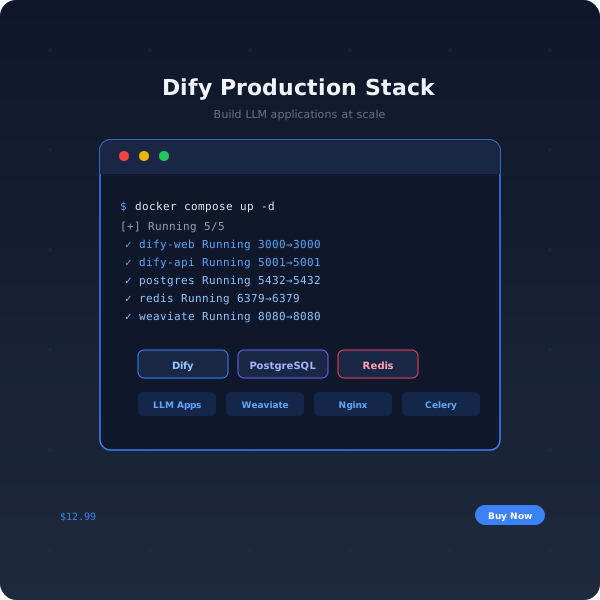
- Dify — Build LLM applications with visual workflows, RAG pipelines, and agent capabilities, connected to a production-grade vector store
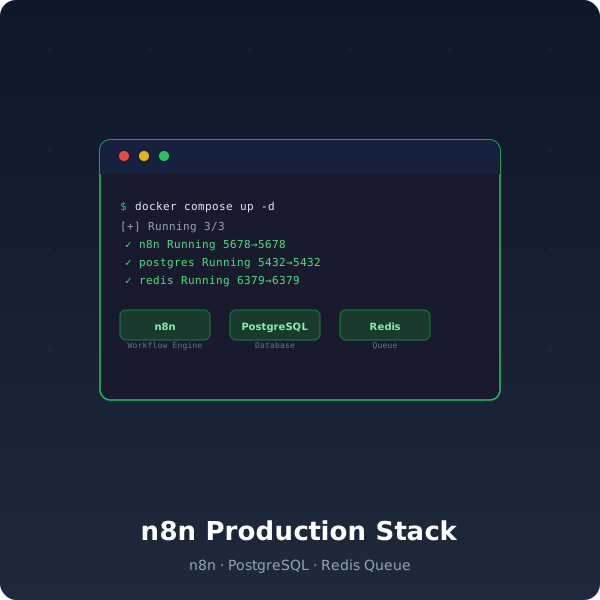
- n8n — Automate workflows across 400+ integrations (email, Slack, CRM, databases), triggered by AI outputs and webhooks
- Ollama — Run local LLM inference with GPU acceleration, zero per-token API costs, accessible to both Dify and n8n
- Qdrant — Power semantic search and RAG pipelines with a high-performance vector database that Dify connects to natively
- Prometheus + Grafana — See CPU, memory, disk, and container metrics for every service on a dashboard 30 seconds after deploying
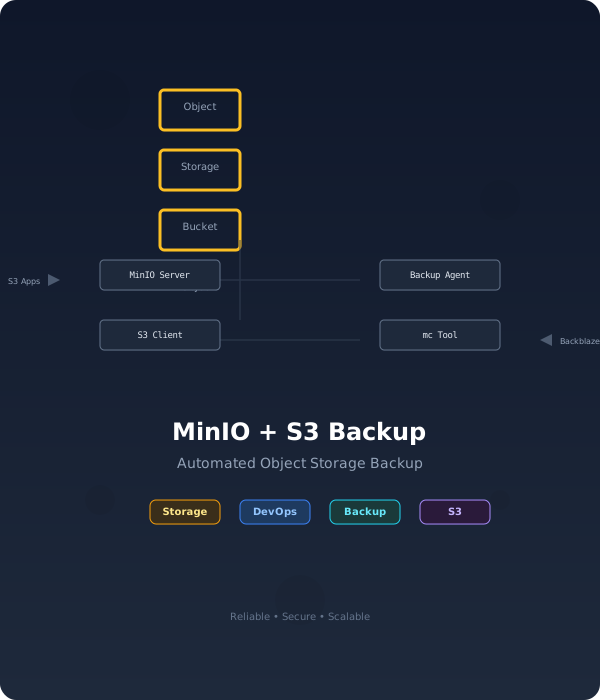
- MinIO — Store backups and artifacts in S3-compatible object storage, automatically backing up every service nightly
You'll get a system where everything is wired together:
- Dify's vector store connects to Qdrant for production-scale RAG pipelines
- n8n triggers Dify workflows via webhooks and routes AI outputs anywhere
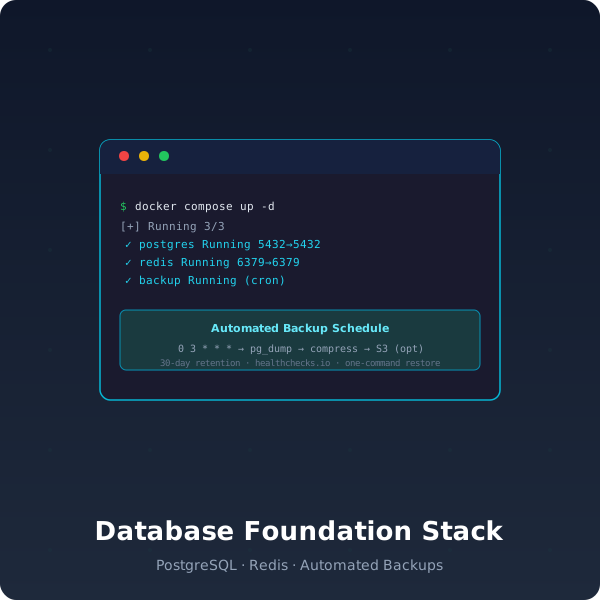
- MinIO serves as the backup target for every service — with tested restore procedures
- Traefik auto-provisions Let's Encrypt certificates for all services with zero config
- Prometheus auto-discovers services and Grafana visualizes the entire stack's health
- Resource limits prevent Ollama from starving Dify of memory
- Inter-service communication is isolated on internal Docker networks
- Version pins enable zero-downtime updates without breaking changes
- Individual services are independently updatable, restartable, and scalable
Why This Saves You Hours
Doing this yourself means weeks of integration work:
- Research time: Reading Dify docs, n8n docs, Ollama docs, Qdrant docs, Traefik docs, Prometheus docs — then figuring out how they connect
- Integration debugging: "Why can't n8n reach Ollama?" "Why does Dify's vector store keep disconnecting?" — hours of forum-scrolling
- Missing pieces: You'll realize two weeks in that nothing is backed up, there's no monitoring, and secrets are in plaintext
- Maintenance drag: Updating one service breaks another because nothing was designed to work together
This stack gives you the finished integration layer. Skip the research, skip the debugging, skip the "I'll add backups later" that never happens.
What You Get
A ZIP archive containing:
- docker-compose.yml — The complete 20+ service stack, fully commented with sane defaults
- .env.example — Every environment variable documented with sensible defaults
- README.md — Architecture overview, quick-start guide, and production runbook
All future updates are included at no additional cost. When Dify, n8n, or any component releases a new version, the updated compose file is published as a free download.
No subscriptions. No recurring fees. One purchase, lifetime access, unlimited deployments.
Requirements
- Docker Engine 24+ with Docker Compose v2
- Linux server (x86_64 or ARM64)
- 8GB RAM minimum, 16GB recommended
- 50GB free disk space (for models, embeddings, and data)
Your Outcome
30 minutes from now, you'll have a production-grade AI infrastructure platform running on your hardware. Dify orchestrating LLM workflows, n8n automating across 400+ integrations, Ollama serving local models, Qdrant powering semantic search, Prometheus monitoring everything, and MinIO backing it all up. No debugging, no forum-scrolling, no missing config files.